Sub-zero pain peak: what Britain’s winter deep freeze reveals about chronic illness at work
Mamedica’s new Sick Note Britain analysis shows how cold snaps are intensifying flare-ups and pushing millions out of employment
January didn’t just feel cold for the millions of people living with persistent pain, it was disabling.
During the early-January Arctic outbreak, temperatures fell below -10°C across multiple UK regions, reaching -14.7°C in Scotland in January. The Met Office has also highlighted the month’s disruptive winter pattern across regions, reinforcing how unsettled conditions have been this season.
For the 18 million adults estimated to be living with persistent pain, sub-zero spells aren’t just a seasonal inconvenience, they also mean stiffer mornings, sharper flare-ups, disrupted sleep, reduced mobility and a noticeable drop in day-to-day function. For some, that’s the difference between coping and not coping. Between staying in work and having to step back.
This was one of the key insights from Mamedica’s latest report, Sick Note Britain, which set out to capture how winter volatility affects people living with persistent pain across the UK and it has since been picked up widely across the regional press.
When pain affects work, money and mental wellbeing
Persistent pain doesn’t stay contained in the body. It affects how you sleep, how you cope, and how you function in day-to-day life and that can affect employment.
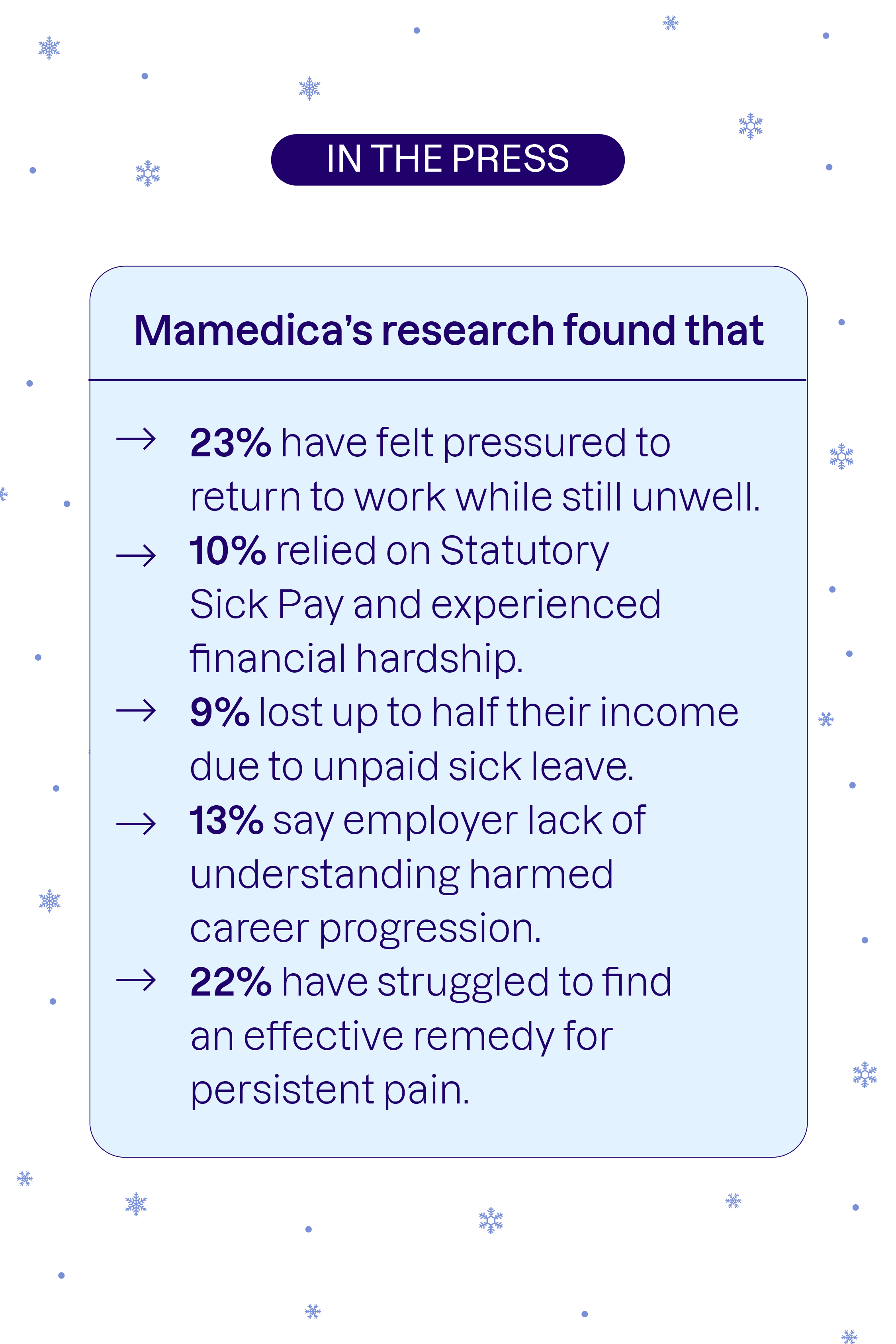
Sick Note Britain found:
- 23% felt pressured to return to work while still unwell.
- 10% relied on Statutory Sick Pay and experienced financial hardship.
- 9% lost up to half their income due to unpaid sick leave.
- 13% say lack of employer understanding harmed career progression.
That’s not a fringe issue. It’s a mainstream health and work challenge and colder weather can exacerbate it.
If you’re experiencing pain that lasts 12 weeks or more, the NHS recognises this as long-term pain and offers guidance on getting support and exploring management options. It’s also common for long-term symptoms to overlap with sleep disruption and mood strain.
Why cold weather can intensify chronic pain and neuropathic pain
Cold snaps don’t cause chronic pain but they can make symptoms feel worse. Patients often report:
- Increased stiffness and reduced range of motion.
- More frequent flare-ups, especially in musculoskeletal pain.
- Greater nerve sensitivity, burning, tingling, shooting sensations.
- Sleep disruption, which can lower resilience and raise pain sensitivity.
- Reduced activity levels, which can create a cycle of worsening symptoms.
That’s why winter often drives a surge in searches for treatment options: flare-ups can quickly erode function and sleep, prompting people to look for support that protects day-to-day quality of life.
Conditions that often worsen during sub-zero spells
Pain is personal, but winter flare patterns commonly show up across a few condition groups:
- Chronic pain, low back pain and sciatica: Cold-related stiffness can restrict movement and disrupt sleep, and reduced mobility can compound symptoms.
- Fibromyalgia and widespread pain: Winter can magnify fatigue, broken sleep, and generalised pain intensity.
- Neuropathic pain and peripheral neuropathy: Cold sensitivity can intensify nerve-related discomfort for some people.
- Migraine and weather-triggered headaches: Pressure shifts and unstable fronts can increase attacks for some people.
Next steps: if winter is worsening your symptoms
In the UK, cannabis-based products for medical use can be prescribed by specialist doctors where clinically appropriate, following the 2018 rescheduling and within existing guidance.

A few important patient points:
- This is not self-medication or over-the-counter cannabis.
- Treatment is clinician-led, based on your medical history and traditional treatments you’ve tried already.
- The goal is symptom support and function often focusing on pain, sleep, and quality of life.
- A specialist doctor will review suitability, safety, and potential interactions on a periodic basis.
If pain flare-ups are disrupting your sleep, mobility, or ability to work, a practical next step is to check whether you may be eligible for a clinician-led consultation.